

01 — The Market Moment
Institutional capital is flooding into bank-issued QIS programs.
QIS AUM Today
$850B
Estimated industry assets
QIS AUM, 2015
$362B
A decade ago
Growth
+135%
In ten years
Bank-Issued QIS
The crowded trade.
- 01
Synthetic exposure via structured products
- 02
Counterparty risk to issuing bank
- 03
Commoditized rule sets across allocators
- 04
Sits on a bank's balance sheet
- 05
Opaque pricing, hidden fees
Cerro Lobos
The non-commoditized alternative.
- 01
Directly owned positions in the master fund
- 02
No counterparty wrappers
- 03
Proprietary research-driven rule set
- 04
Conventional master-feeder structure
- 05
Transparent terms, audited annually
— same systematic discipline · without the synthetic wrapper —
— Why Now
America remains the best-positioned environment for asymmetric returns.
The U.S. economy combines innovation, flexibility, and resilience in a way no other nation matches. Continued global leadership in AI, software, biotech, energy, and defense. Resilient legal and financial institutions that absorb shock and reward risk-taking. A culture that attracts top global talent and reinvents itself continuously.
Strategic positioning in high-growth innovators, mis-priced market leaders, and Bitcoin generates superior long-term returns while managing risk through an evolving macroeconomic environment. The investment landscape is rapidly evolving — many disruptive companies remain under-appreciated by traditional analysts. Asymmetric return potential lives in those gaps.

02 — Strategy
Three pillars, one wheel.
The investment landscape is rapidly evolving, creating mis-priced opportunities in foundational technologies, undervalued market leaders, and Bitcoin. Many disruptive companies are under-appreciated by traditional analysts, offering asymmetric return potential.
Future Foundational
~40 – 60%
Future Foundational Companies
Investing in innovative, disruptive businesses with strong growth potential currently undervalued by the market.
Undervalued Leaders
~25 – 40%
Undervalued Market Leaders
Established companies with solid fundamentals and competitive advantages, trading below intrinsic value.
Bitcoin
~10 – 25%
Bitcoin
A strategic allocation as a hedge against inflation and fiat currency devaluation; recognized as a long-term store of value. And rapidly gaining traction as a medium of exchange and a unit of account.
The Wheel
Overlay
An income overlay applied across all three pillars
The Wheel — A Systematic Income Overlay
A rules-based options program that earns yield on names we already own.
Mechanics
- 01
Cash-secured puts on high-conviction current holdings at levels we'd be willing to buy.
- 02
Premium capture while waiting — yield on patience, earned whether or not the asset is assigned.
- 03
Covered call overlay on assigned positions, systematically monetized until exit.
Constraints
- 01
No leverage.
- 02
No naked options.
- 03
No exotic structures.
- 04
No synthetic derivatives.
How It Fits Together
One platform. Three pillars. One wheel. Zero orphan strategies.
The Wheel draws from the same scored universe as the long-equity pillars — the qualitative and quantitative work that identifies Future Foundational and Undervalued Leaders is the same work that determines which assets we'd sell puts against.
Two expressions of a single conviction. Systematic and rules-based where allocators want it. Transparent and directly owned where the banks can't deliver. Income-generative on research IP already paid for.
Independent Platform
How three investment pillars and one income overlay operate as a single integrated system
Why this works.
- 01
Proprietary research, not licensed signals. A 14-iteration internal model evaluating every publicly traded U.S. equity. Built and refined in-house over twenty-five years. Not white-labeled. Not subscribed. Not shared.
- 02
Lean, technology-driven operations. A small team running modern infrastructure. Lower overhead than a traditional discretionary fund. Scale through automation, not headcount.
- 03
One platform. Three pillars. One wheel. The same scored universe drives long-equity selection and Wheel assets. Research IP, paid for once, expressed across the strategy stack.
— a single integrated platform across long equity, hard asset, and income overlay —
Competitive Edge
Three structural advantages that compound into systematic outperformance
Why this beats the competitive landscape.
- 01
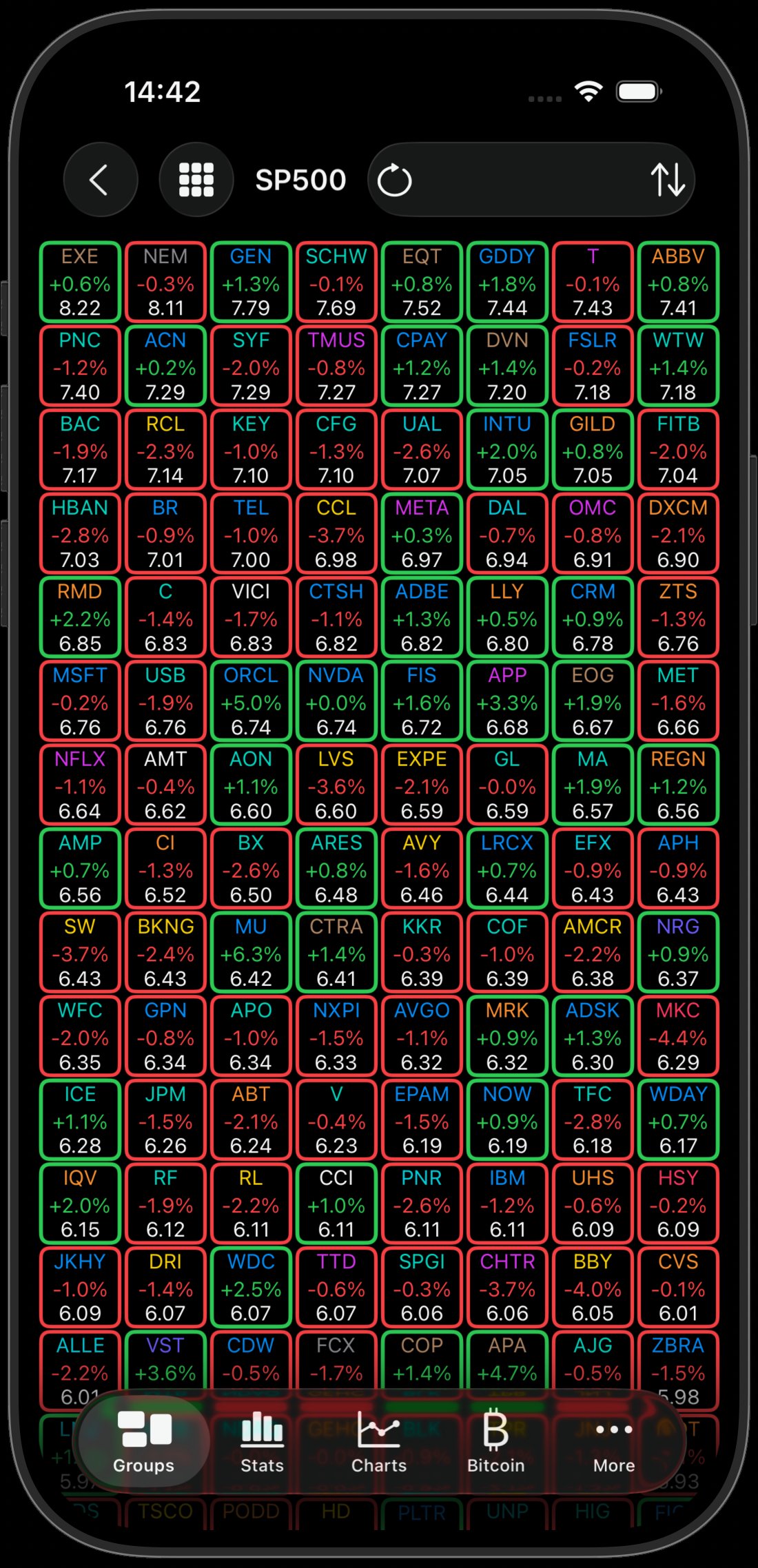
Proprietary Quantitative Platform. Custom-built models detect market inefficiencies early. Cerro Lobos runs daily on a universe of approximately 4,200 securities, scored through a 14-iteration internal model. Built and refined in-house over twenty-five years. Not licensed. Not white-labeled.
- 02
Risk Management & Structural Advantage. Disciplined risk-adjusted return optimization across all three pillars. Strict regulatory compliance under the Master-Feeder structure. A lean, technology-driven operational model with lower overhead than traditional discretionary funds.
- 03
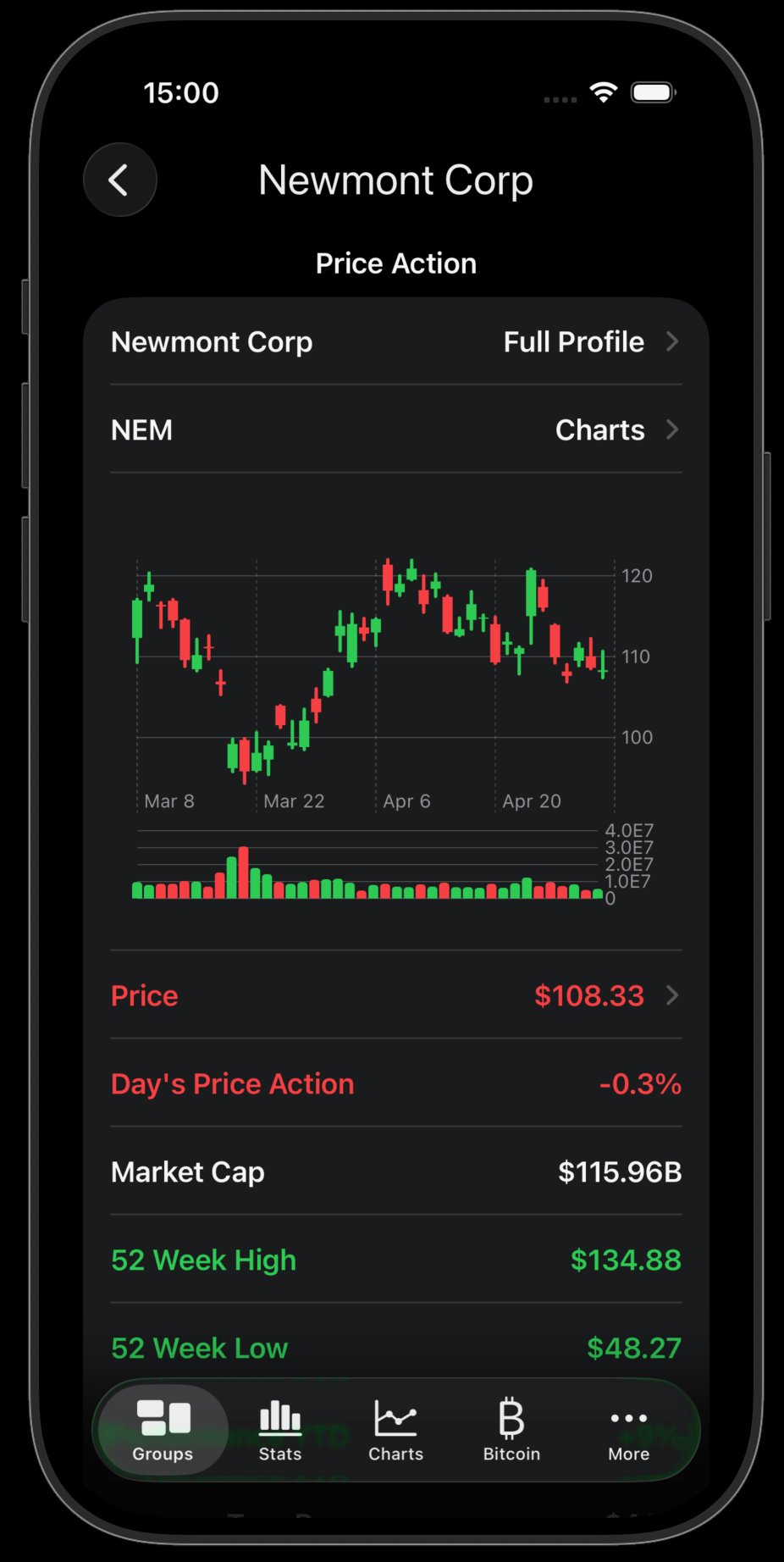
Unique Investment Strategy. Three pillars combining foundational technology, undervalued market leaders, and Bitcoin — held directly, not synthesized. Income generated through a systematic overlay (the Wheel) on the same scored universe. One platform. Three pillars. One wheel.

03 — Structure
Master, two feeders.
Cerro Lobos is organized as a Master–Feeder structure, the same framework used by leading global hedge funds: a U.S. fund for American investors and an offshore fund in the Cayman Islands for international and tax-deferred investors.
Both feeders invest into a single Cayman Master Fund where all trading and portfolio management occur.
Tax-neutral, well-regulated jurisdiction. Cayman Islands Monetary Authority (CIMA) and SEC compliance. Annual audits.
Cerro Lobos Capital Master, Ltd is a Cayman Islands–domiciled master-feeder investment fund focused on long-term capital appreciation through a concentrated, research-intensive strategy.
Two feeders push capital into one master fund where all investments occur.
Why Cayman?
A legal and historical timeline of the master-feeder structure.
-
1950s – 1970s
Birth of Tax-Exempt Investor Rules
The concept of Unrelated Business Taxable Income (UBTI) came from the Revenue Act of 1950 and was expanded in 1969. Congress wanted to stop tax-exempt entities — universities, pensions, churches — from running active businesses tax-free. The rule: if a tax-exempt entity invests in a partnership that uses leverage or operates a business, its share of that income becomes UBTI and is taxable. That rule still stands today (IRC §§512–514).
-
1974
ERISA and the Rise of Pension Capital
The Employee Retirement Income Security Act of 1974 created a massive pool of regulated pension capital seeking professional investment management. Those pensions wanted exposure to private funds but couldn't invest directly into leveraged partnerships without triggering UBTI. Thus began the search for "blocker" structures. These are legal vehicles that preserve the pension's tax-exempt status. A blocker is a corporation that sits between the tax-exempt investor and the fund's investments. Certain categories of income — particularly income generated through leverage or debt-financed investments — would otherwise jeopardize a pension's tax-exempt status if received directly. A blocker absorbs that income at the corporate level, then distributes it to investors as ordinary dividends, a form of income that pensions can receive without consequence.
-
1980s – 1990s
Offshore Blocker Corporations Emerge
By the 1980s, U.S. counsel — notably Seward & Kissel, Schulte Roth, and others — began advising hedge funds to use offshore corporations (typically Cayman or British Virgin Islands) as blockers. These corporations were treated as separate taxpayers, insulating U.S. exempt investors like pensions and IRAs from partnership-level UBTI. The IRS did not object. It issued Private Letter Rulings (PLR 9037010, 1990) confirming that investing through a foreign corporation blocks UBTI because the exempt investor owns stock, not a partnership interest.
-
1990s – 2000s
The Cayman Master-Feeder Becomes the Industry Standard
As offshore jurisdictions — especially the Cayman Islands — built modern fund laws (the Mutual Funds Act of 1993 and CIMA oversight), Cayman became the natural home for these blockers. Hedge funds institutionalized the master-feeder structure: a U.S. feeder for taxable investors (pass-through), a Cayman feeder for tax-exempt and non-U.S. investors (blocker), and a Cayman master as the central trading pool. By the early 2000s, virtually every U.S. hedge fund with global investors used this format.
-
Today
Explicitly Built Into the System
The U.S. government fully accepts the structure, conditional on the Foreign Account Tax Compliance Act of 2010 (FATCA) and anti-money laundering (AML) compliance. The IRS, SEC, and Treasury all recognize the legitimacy of Cayman feeders for U.S. tax-exempt investors. The concept is discussed openly in IRS training materials, tax treatises, and SEC fund-registration disclosures. It's not a loophole — it's a structural accommodation built into the modern U.S. tax regime.
Recognition
Three reasons U.S. tax-exempt and regulatory authorities accept this architecture.
Why the structure is recognized.
- 01
Tax neutrality, not tax evasion. The Cayman entity doesn't eliminate U.S. taxes — it ensures they're paid at the corporate level instead of flowing through to tax-deferred investors.
- 02
Economic benefit. The structure lets retirement plans and pensions — trillions in assets — invest in private markets, hedge funds, and alternatives, strengthening U.S. capital markets.
- 03
Transparency and compliance. Cayman funds must comply with FATCA and report any U.S. ownership to the IRS. The U.S. retains full visibility — transparent, not secretive.

04 — Team
Three principals.

01
John Williams
Chief Executive Officer
John Williams is a founder and Chief Executive Officer of Cerro Lobos Capital. John has over 25 years of experience investing in equities with direct experience in the energy, aviation, and defense sectors. Prior to founding Cerro Lobos Capital, John served as a pilot in the Air Force and the civilian world for over 40 years. John received his Bachelor of Science Degree from the United States Air Force Academy.

02
Domingo "Ocho" Ochotorena
Chief Investment Officer
Domingo 'Ocho' Ochotorena is a founder and Chief Investment Officer of Cerro Lobos Capital. Ocho has over 35 years experience investing in equities. 25 years ago he developed the first version of his proprietary model to evaluate and compare every publicly traded equity in the US. Over the years he has continued to refine that model and it's in its 14th iteration of improvement. Ocho has undergraduate and graduate degrees in Mechanical and Electrical Engineering from the University of Bridgeport and Boston University. Ocho served 21 years in the United States Air Force and flew several different fighter aircraft. Ocho is a graduate of the USAF Test Pilot School. He was awarded the Distinguished Flying Cross for valor in combat.

03
Alvaro Montealegre
Chief Technical Officer
Alvaro Montealegre is a founder and Chief Technical Officer of Cerro Lobos Capital. With over a decade of experience, Alvaro specializes in developing systematic strategies for highly liquid public assets. Prior to launching Cerro Lobos Capital, he founded and led Monedi Capital Group, an offshore fund focused on generating capital returns through trend-following and volatility-based strategies. Alvaro focused his undergraduate studies in Actuarial Sciences at Texas Christian University.
05 — Inquiries
Open a conversation.
Cerro Lobos accepts inquiries from qualified investors and institutional allocators. The fund is offered exclusively under Regulation D 506(b); we do not engage in general solicitation. To begin a conversation, please reach out by email.
— Primary inquiry channel —
investors@cerrolobos.com
Click to compose · Typical response within two business days
06 — Disclaimer
Disclosures.
This site is for informational purposes only. Investments in Cerro Lobos Capital are speculative, involve significant risk, and may result in the loss of all capital. Past performance is not indicative of future results. Withdrawals are subject to a two-year lock-up and other restrictions set forth in the Confidential Private Offering Memorandum. Prospective investors should review the PPM and consult their own financial, legal, and tax advisors before investing. The fund and its affiliates make no guarantees regarding investment outcomes.
This site does not constitute an offer to sell or a solicitation to buy any securities. The fund is offered exclusively under Regulation D 506(b) and is available only to accredited investors and qualified purchasers.